
Why Sitting All Day Can Make Your Hips Feel Stiff
A plain-language look at what happens in the hips after hours of sitting, and why the first few steps can feel stiff.
On this page
See a doctor now if you have:
- Sudden severe pain
- Inability to bear weight
- Fever with joint pain
- Numbness
- Loss of bladder or bowel control
- Recent trauma
You stand up after a long meeting and your hips feel like they need a moment to catch up. This is one of the most common things people ask us about — and it’s a normal response to prolonged sitting, not a sign of injury.
What’s actually happening
Sitting keeps your hip flexors — the muscles at the front of the hip — in a shortened position for hours at a time. Your glutes, which normally help extend the hip, are relatively inactive while seated. When you stand, both muscle groups have to “wake up” and adjust, which can feel like stiffness or tightness for the first minute or two of movement.
This is generally a temporary, positional response rather than a structural problem, and it commonly eases quickly once you start moving.
What some people find useful
- Standing and walking briefly every 30–45 minutes
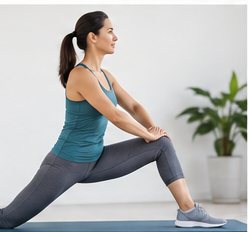
- A short hip flexor stretch before standing up from a long sitting block
- Gentle glute activation exercises, such as bridges
- Paying attention to chair height and depth — see our desk setup guide
Is this the same as hip osteoarthritis?
No — everyday post-sitting stiffness that eases within a few minutes is a different pattern from the stiffness associated with joint conditions like osteoarthritis, which tends to be more persistent. If stiffness is lasting longer, getting worse, or is accompanied by swelling, it’s worth discussing with a qualified clinician.
One thing to do today
Pick one thing from this page and try it today — small and consistent beats occasional and intense.
Sources
- Placeholder — full citation pending clinical review — To be replaced with a peer-reviewed source before this page leaves draft status.
Related reading
Hip Anatomy Explained
A closer look at the bones, cartilage, muscles, and tendons that make up the hip joint, and how they work together.
Hip Bursitis
Irritation of one of the small, fluid-filled sacs that help reduce friction near the hip. Pain may be more noticeable when lying on the affected side.
Hip Fractures
A break in the upper part of the thigh bone, most often linked to a fall, that needs prompt medical attention — general education on what to know.
Hip Impingement (Femoroacetabular Impingement)
A pattern where the ball and socket of the hip don't glide past each other quite as smoothly as expected, which can cause pinching pain with certain movements.
Next step
Try tonight's 10-minute routine →